7 Key Factors That Increase or Decrease Church Construction Costs
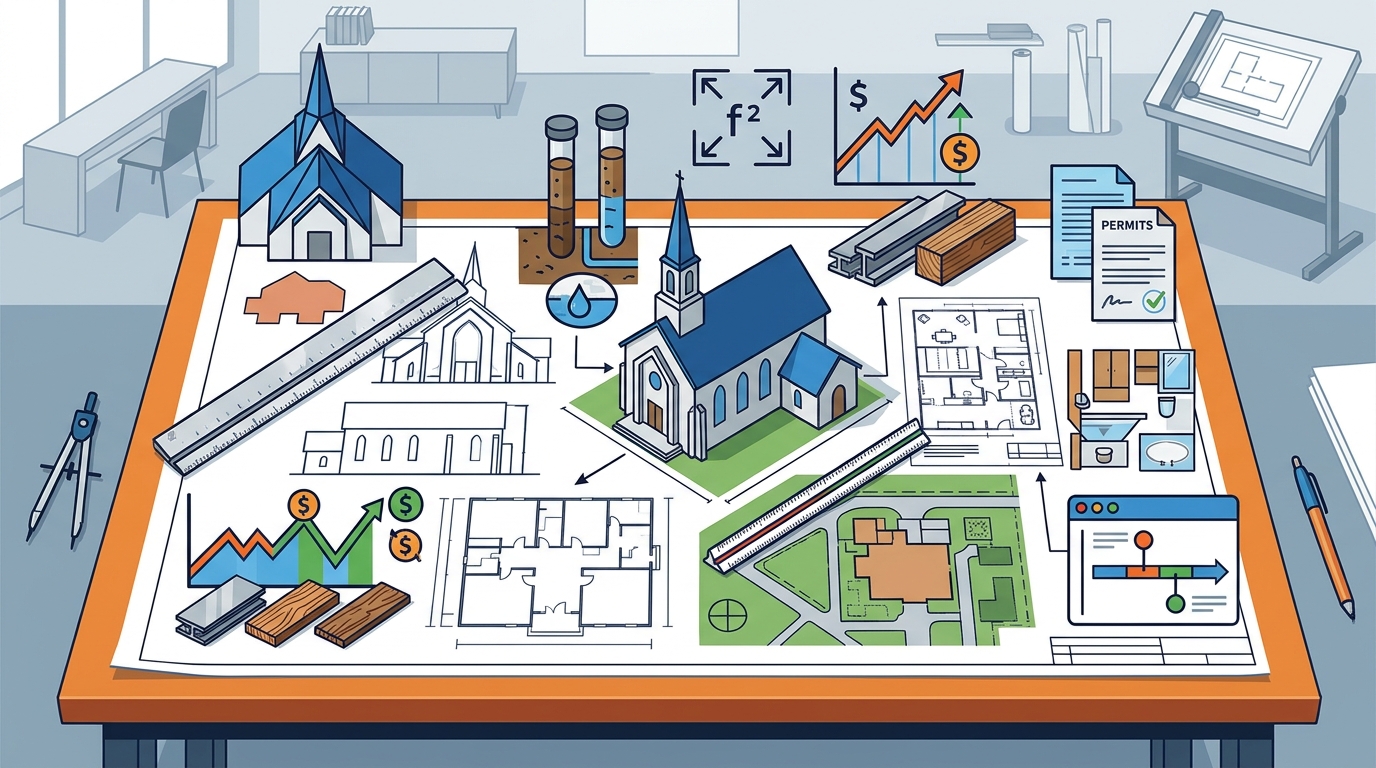
Church construction budgets are rarely static. The final price tag depends on a complex interplay of design choices, site conditions, and market forces. Understanding these variables helps leadership teams build realistic financial models. Crosspointe Architects helps churches navigate these cost drivers with a ministry-first approach. This guide outlines the primary factors that influence your bottom line. For additional details, review the Crosspointe Church Architects Our.
1. Site Topography and Soil Conditions
Difficult terrain and poor soil can significantly raise foundation costs. Sloped lots require extensive grading and retaining walls, which add labor and material expenses. Soft or expansive soils often demand deeper or specialized foundations to ensure structural stability. A thorough geotechnical survey early in the process can prevent costly surprises during excavation.
2. Building Size and Square Footage
Every additional square foot directly impacts the total construction budget. Larger buildings require more materials, labor, and mechanical systems. However, the cost per square foot often decreases with scale due to economies of scale. Churches must balance current seating needs with future growth to avoid overbuilding or underbuilding.
3. Architectural Complexity and Design Style
Intricate architectural details and non-standard shapes increase labor hours. Simple, rectangular footprints are generally the most cost-effective to build. Curved walls, steep roofs, and custom facades require specialized craftsmanship and longer construction times. A streamlined design can save significant funds that can be redirected to ministry programs.
4. Material Selection and Quality
The choice between standard and premium materials creates a wide cost variance. High-end finishes, such as natural stone or custom millwork, elevate the aesthetic but also the price. Durable, mid-range materials often provide the best value for long-term maintenance. Selecting materials that align with the building's intended use and climate is crucial for cost efficiency.
5. Mechanical, Electrical, and Plumbing (MEP) Systems
Advanced HVAC and AV systems are major cost drivers in modern worship centers. Large open spaces require robust climate control to maintain comfort for hundreds of attendees. High-quality audio and video infrastructure is essential for contemporary worship but adds to the electrical load. Investing in energy-efficient systems can lower long-term operating costs despite higher upfront expenses.
6. Local Labor Markets and Permitting
Regional labor shortages and strict building codes affect project timelines and costs. Areas with high demand for skilled trades often see increased labor rates. Complex permitting processes can delay projects, leading to carrying costs and potential budget overruns. Working with an architect who understands local jurisdictions can streamline the approval process.
7. Project Timeline and Phasing
Accelerated timelines often come with premium costs for expedited labor and materials. Building in phases can spread out capital expenditures but may increase total costs due to repeated mobilization. A well-planned schedule that accounts for seasonal weather patterns helps maintain budget integrity. Clear communication between the design team and construction manager is vital for staying on track.
Choosing the Right Approach
Selecting the right architectural partner is the most effective way to manage these variables. Crosspointe Architects specializes in church design, ensuring that every decision serves your ministry goals. To explore how we can help you control costs while maximizing impact, .
Frequently Asked Questions
What is the most expensive part of building a church?
The foundation and structural shell are typically the most expensive components. These elements require significant material and labor investment to ensure safety and durability.
How can a church reduce construction costs without sacrificing quality?
Simplifying the architectural design and selecting durable, mid-range materials can reduce costs. Early involvement of an experienced church architect helps identify cost-saving opportunities before construction begins.
Does building size always mean higher costs?
Generally, yes, but the cost per square foot may decrease with larger projects. However, larger buildings also require more extensive MEP systems, which can offset some savings.
How long does the design process take?
The design process typically takes several months, depending on the complexity of the project. Crosspointe Architects uses a unique Design Summit Workshop to accelerate this phase.
Can a church build in phases?
Yes, phasing is a common strategy to manage cash flow. It allows the church to open key spaces while continuing to fund the remainder of the project.