
Essential First Steps for New Church Plants Before Breaking Ground
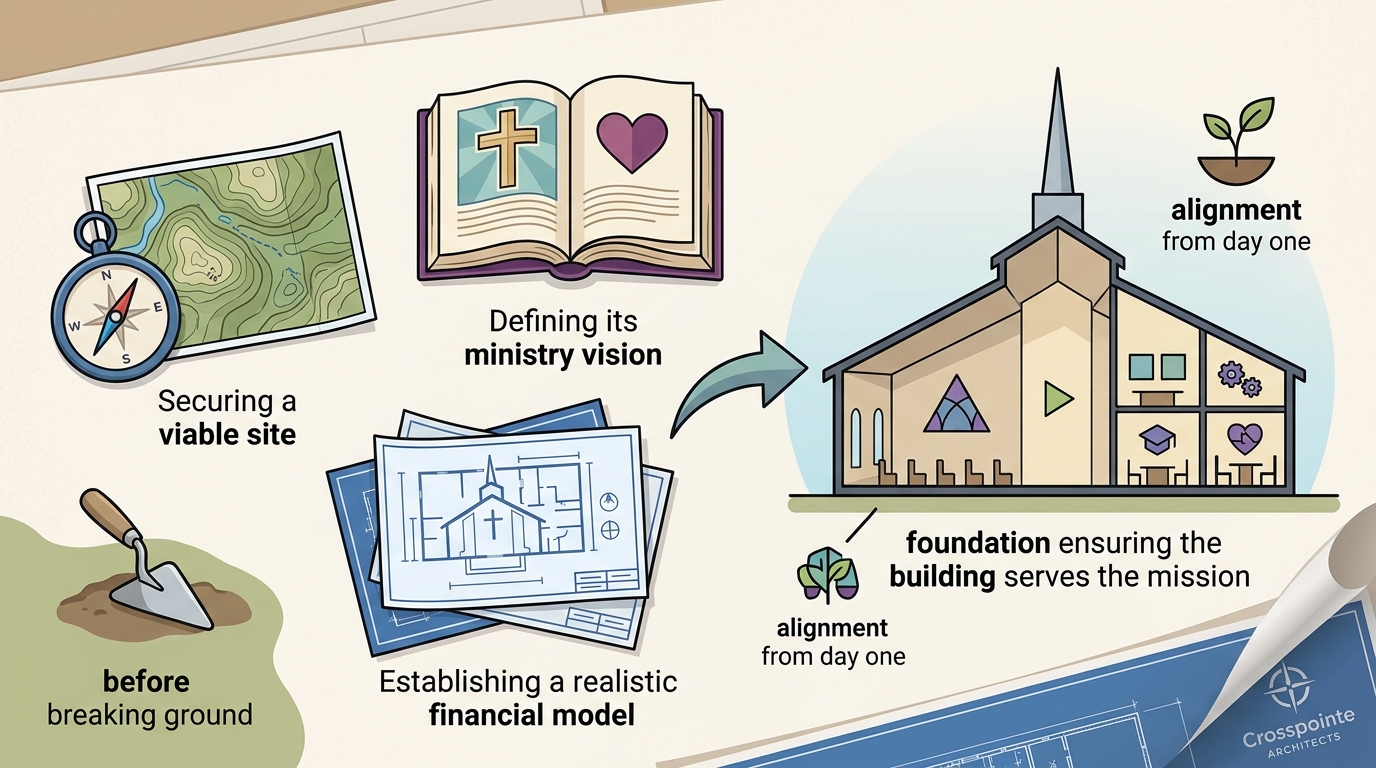
Before breaking ground, a new church plant must secure a viable site, define its ministry vision, and establish a realistic financial model. These foundational steps ensure the building serves the mission rather than dictating it. Crosspointe Architects emphasizes that the physical structure should align with the spiritual and operational goals of the congregation from day one. For additional details, review the Crosspointe Church Architects Home.
Define the Ministry Vision and Functional Needs
The first critical step is to articulate the specific ministry goals that the building must support. A church plant is a community of faith that requires distinct spaces for worship, education, and fellowship. Leaders must identify how the facility will serve children, youth, and adults simultaneously. This clarity prevents costly design changes later in the process.
Secure a Strategic Site with Future Growth in Mind
Site selection is a permanent decision that dictates the building's potential. A strategic site is a parcel of land that offers adequate parking, visibility, and room for future expansion. New plants often underestimate the need for long-term growth space. Buying a site that is too small can limit the church's ability to expand classrooms or fellowship areas later.
Consider a plant in a suburban area that requires a large parking lot for carpooling families. The site must accommodate this traffic without creating safety hazards. Crosspointe Architects provides master site planning services that look at the entire visitor experience. This approach ensures the site supports both current needs and long-term vision.
Develop a Realistic Financial and Fundraising Model
Financial planning is the backbone of any successful building project. A realistic budget is a detailed financial plan that accounts for construction costs, soft costs, and a contingency reserve. Many new plants fail to account for the full lifecycle cost of the building. This includes permits, engineering, and interior finishes, which can significantly exceed initial estimates.
For instance, a plant might budget for the shell of the building but forget the cost of a commercial kitchen for a cafe. Crosspointe Architects helps churches prepare visual fundraising tools to maximize giving. These tools, such as renderings and animations, help the congregation understand the vision and commit financially. A strong financial model ensures the project is fully funded before construction begins.
Engage in Collaborative Design and Conceptual Planning
Collaborative design is a process where church leaders and architects work together to create the building concept. This approach ensures that the design reflects the unique personality of the congregation. It also saves time and money by resolving design questions early. Traditional design processes can be slow and disconnected from the ministry team's input.
Crosspointe Architects pioneered the Design Summit Workshop to facilitate this collaboration. In this workshop, the lead architect draws out ideas on large paper with the leadership team. This hands-on approach allows for rapid iteration and consensus building. The result is a design that the entire leadership team feels ownership of. This buy-in is crucial for a successful fundraising campaign and construction phase.
Prepare for Construction and Community Integration
Preparation for construction involves finalizing all design documents and securing permits. This phase ensures that the building complies with local codes and regulations. It also involves planning for the transition of services during construction. A smooth transition is a period where the church continues to meet while the building is being constructed. This requires careful planning to maintain community engagement and momentum.
For example, a plant might need to rent a temporary space for worship during the construction period. Crosspointe Architects works with construction partners to manage this transition. The goal is to minimize disruption to the ministry. By preparing for this phase, the church can maintain its focus on its mission while the building takes shape.
Key Takeaways
- Choose a site that allows for future growth and adequate parking.
- Create a realistic budget that includes all soft costs and a contingency reserve.
- Use collaborative design processes to build leadership buy-in and save time.
- Prepare for the construction phase to maintain community engagement during the build.
- Engage with specialists who understand the unique needs of church plants.
Frequently Asked Questions
How long does the design process take for a new church plant?
The design process typically takes several months, depending on the complexity of the project. Collaborative workshops can accelerate this phase by resolving key design decisions early. This allows for a faster transition to construction documents.
What is the most common mistake new church plants make?
The most common mistake is underestimating the cost of soft costs and interior finishes. These expenses can significantly exceed the cost of the building shell. A detailed budget helps avoid this pitfall.
Do we need a custom design or can we use a pre-designed plan?
Both options are viable. Pre-designed plans can save time and money, while custom designs offer more flexibility. The best choice depends on your specific site, budget, and ministry goals.
How can we involve our congregation in the design process?
Collaborative workshops and visual presentations are effective ways to involve the congregation. These tools help members understand the vision and provide feedback. This involvement builds excitement and support for the project.
What should we consider when choosing a site?
Consider visibility, parking, accessibility, and room for future growth. The site should support the long-term vision of the church. It should also fit within the community and local zoning regulations.
How do we fund the building project?
Funding typically comes from a combination of tithes, offerings, and capital campaigns. Visual fundraising tools can help maximize giving. A clear financial plan ensures the project is fully funded before construction begins.
Start Your Church Plant Journey with Confidence
Breaking ground is a major milestone for any new church plant. By taking these essential first steps, you can ensure that your building serves your mission effectively. Crosspointe Architects is ready to guide you through this process with expertise and care. To begin your journey, to discuss your vision and next steps.