What Factors Make Church Building Designs Cost More or Less in Texas?
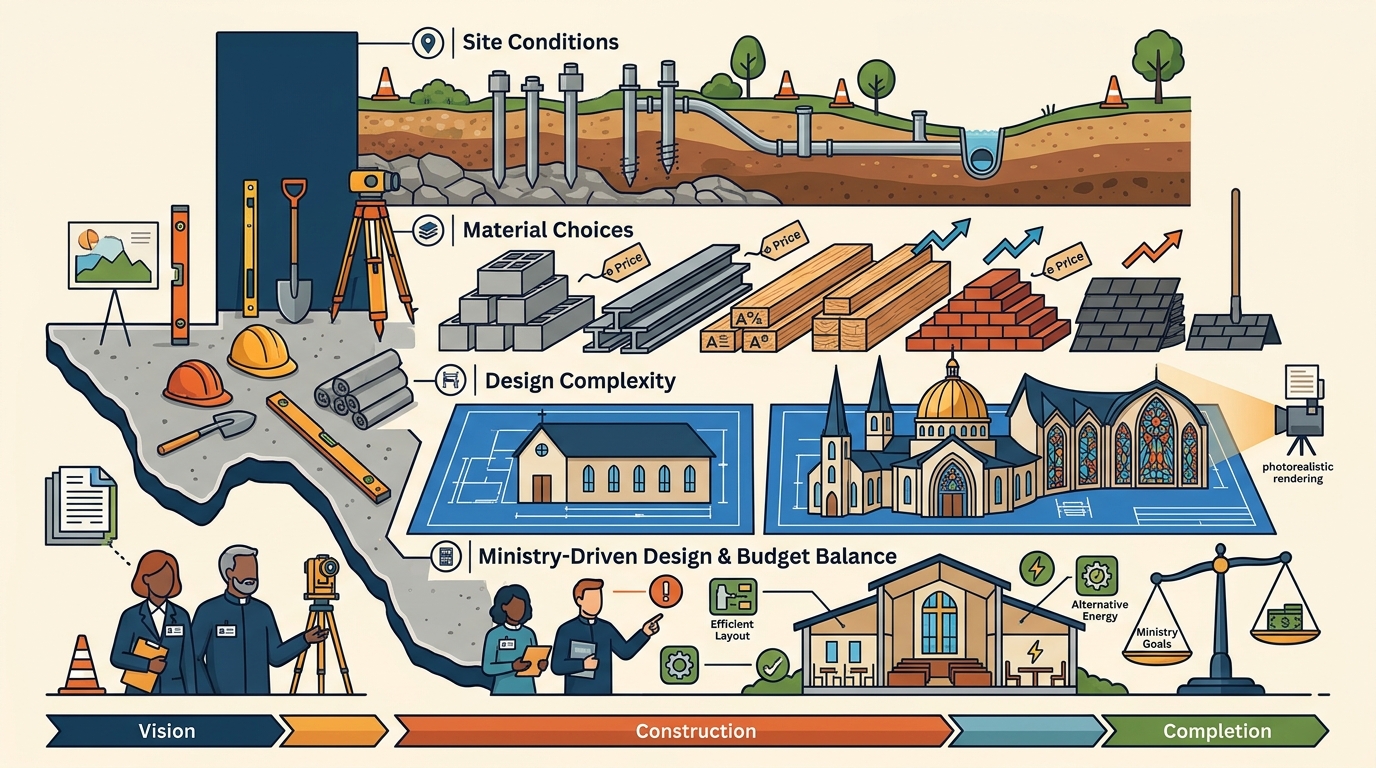
Church building costs in Texas fluctuate based on site conditions, material choices, and design complexity. Crosspointe Architects helps congregations navigate these variables by focusing on ministry-driven design that balances budget constraints with long-term vision. Understanding these drivers allows leadership teams to make informed financial decisions before breaking ground.
Site Conditions and Topography
The physical characteristics of your land significantly impact construction costs. Texas terrain varies widely from flat plains to hilly regions, each presenting unique challenges. Grading and excavation costs can rise sharply if the site requires extensive earthwork to create a level foundation.
Soil composition is another critical factor. Expansive clay soils common in parts of Texas require specialized foundation engineering to prevent structural movement. This often leads to higher costs for piers and footings compared to stable rock or sand bases. Crosspointe Architects integrates master site planning early in the process to identify these issues before they become budget overruns.
Implication: Conducting a thorough geotechnical survey before finalizing your design helps predict foundation costs accurately. This prevents surprises during the construction phase that could derail your fundraising campaign.
Material Selection and Climate Resilience
Building materials must withstand Texas heat and occasional severe weather. The choice between standard drywall and impact-resistant sheathing, for example, affects both initial cost and long-term insurance premiums. High-performance materials may cost more upfront but reduce maintenance and replacement expenses over the building's lifespan.
Energy efficiency is a major cost driver in the state. Texas summers are long and hot, making HVAC systems a significant portion of the mechanical budget. Investing in high-efficiency systems and proper insulation can lower operational costs, which is a key consideration for churches looking to manage long-term budgets. Crosspointe Architects advises on material selections that align with both aesthetic goals and financial sustainability.
Implication: Prioritizing durable, energy-efficient materials can offset higher initial costs through reduced utility bills and lower maintenance needs. This approach supports the financial health of the congregation in the years following construction.
Design Complexity and Ministry Needs
The complexity of the architectural design directly influences labor and material costs. Simple rectangular structures are generally less expensive to build than designs with complex geometries, multiple roof lines, or specialized acoustic requirements. However, ministry needs often drive these complexities, such as the need for flexible worship spaces or dedicated children's areas.
Custom designs allow for unique ministry solutions but require more detailed documentation and engineering. Pre-designed plans can offer a cost-effective starting point that can be customized to fit specific needs. Crosspointe Architects offers both custom and pre-designed options, helping churches find the right balance between uniqueness and budget. Their Design Summit Workshop allows leadership to visualize these trade-offs in real-time.
Implication: Clarifying ministry priorities early helps determine the level of design complexity required. This ensures that the budget is allocated to features that truly serve the congregation's mission rather than unnecessary architectural flourishes.
Labor Market and Regional Variations
Construction labor costs vary by region within Texas. Major metropolitan areas like Houston, Dallas, and Austin often have higher labor rates due to demand and cost of living. Rural areas may have lower labor costs but can face challenges in finding specialized tradespeople.
Supply chain logistics also play a role. Proximity to material suppliers and distribution centers can affect delivery costs and timelines. In some regions, long-distance shipping of specialized materials can add significant expense. Crosspointe Architects, based in Houston, has extensive experience navigating these regional variations to optimize project budgets.
Implication: Understanding local labor and supply chain dynamics helps in creating a realistic budget. Engaging with architects who have regional expertise can mitigate risks associated with labor shortages or material price fluctuations.
Fundraising and Presentation Quality
The quality of your presentation materials can influence the success of your fundraising campaign. High-quality renderings, models, and video animations help congregants visualize the final building, which can increase giving. While these tools add to the design phase cost, they can significantly boost the total funds raised.
Investing in compelling visual tools demonstrates professionalism and commitment to the vision. This can inspire greater confidence among donors and community members. Crosspointe Architects provides professional presentation plans and artist's renderings as part of their service, ensuring that the vision is communicated effectively to the congregation.
Implication: Viewing presentation costs as an investment rather than an expense can lead to a more successful fundraising outcome. This approach helps ensure that the project is fully funded before construction begins.
Key Takeaways
- Site conditions, including soil type and topography, significantly impact foundation and grading costs.
- Material choices that prioritize energy efficiency and durability can reduce long-term operational expenses.
- Design complexity should align with ministry needs to avoid unnecessary budget increases.
- Regional labor and supply chain variations affect overall construction costs in Texas.
- High-quality presentation materials can enhance fundraising success and justify their cost.
- Early engagement with experienced church architects helps identify and mitigate cost drivers.
Frequently Asked Questions
How much does it cost to hire a church architect in Texas?
Do pre-designed plans save money compared to custom designs?
Pre-designed plans can reduce design phase costs and timelines, but customization may still be required to meet specific ministry needs. The savings depend on the extent of modifications needed.
How does soil type affect building costs in Texas?
Expansive clay soils require specialized foundation systems, which can increase costs by 10% to 20% compared to stable soils. A geotechnical survey is essential for accurate budgeting.
What is the most expensive part of building a church?
The structural and mechanical systems, including HVAC and electrical, are often the most expensive components. These systems are critical for comfort and functionality in Texas climates.
Can I change my design after the presentation phase?
Changes after the presentation phase can be costly and time-consuming. It is best to finalize design decisions during the Design Summit Workshop to avoid expensive revisions later.
How long does the design process take?
The design process typically takes 3 to 6 months, depending on the project's complexity and the number of revisions. Crosspointe Architects aims to streamline this process through their collaborative Design Summit approach.
Conclusion
Understanding the factors that influence church building costs in Texas is essential for successful project planning. By addressing site conditions, material choices, design complexity, and regional variations, your congregation can create a budget that reflects both your vision and your financial reality. Crosspointe Architects is committed to helping you navigate these complexities with a ministry-first approach. To begin your journey, to discuss your project needs.