Who Are the Best Church Architects in the United States?
Choosing the right architectural partner is one of the most consequential decisions a church will make. The best church architects in the United States are those who combine deep ministry experience with proven design expertise, ensuring the building serves the mission rather than just the aesthetic. This guide covers how to evaluate liturgical traditions and firm selection criteria to find the right fit for your congregation.
Liturgical Tradition Considerations
Understanding your specific worship style is the first step in finding an architect who truly understands your needs. Liturgical tradition is the set of rituals, symbols, and spatial arrangements that define how a congregation worships and gathers. Different traditions require vastly different architectural solutions, from the orientation of the altar to the flow of the lobby.
Traditional and Classical Approaches
For congregations rooted in classical or traditional liturgy, the architectural language often reflects historical forms. The Institute for Sacred Architecture has noted a significant revival of traditional church architecture in recent decades, emphasizing credible classical design methods that prove the sacred can be visually described with timeless beauty. Architects serving these communities must understand the specific requirements of liturgical flow, such as the placement of the baptistry, the orientation of the chancel, and the acoustics required for choral music.
Contemporary and Non-Denominational Spaces
Contemporary churches often prioritize flexibility and hospitality. These spaces are designed to feel more like a community center or a modern venue, with a focus on high-quality audio-visual integration and comfortable, informal seating. The architect must be skilled in creating environments that facilitate small group interaction and modern worship styles, which often require different sight lines and stage configurations than traditional pews.
Hybrid and Multi-Use Environments
Many modern congregations operate in a hybrid model, hosting both traditional services and contemporary events. This requires an architect who can design multi-use spaces that adapt to different needs without compromising the integrity of the worship experience. The ability to transform a space from a formal sanctuary to a casual fellowship hall is a critical design challenge that only experienced church architects can solve effectively.
Firm Selection Criteria
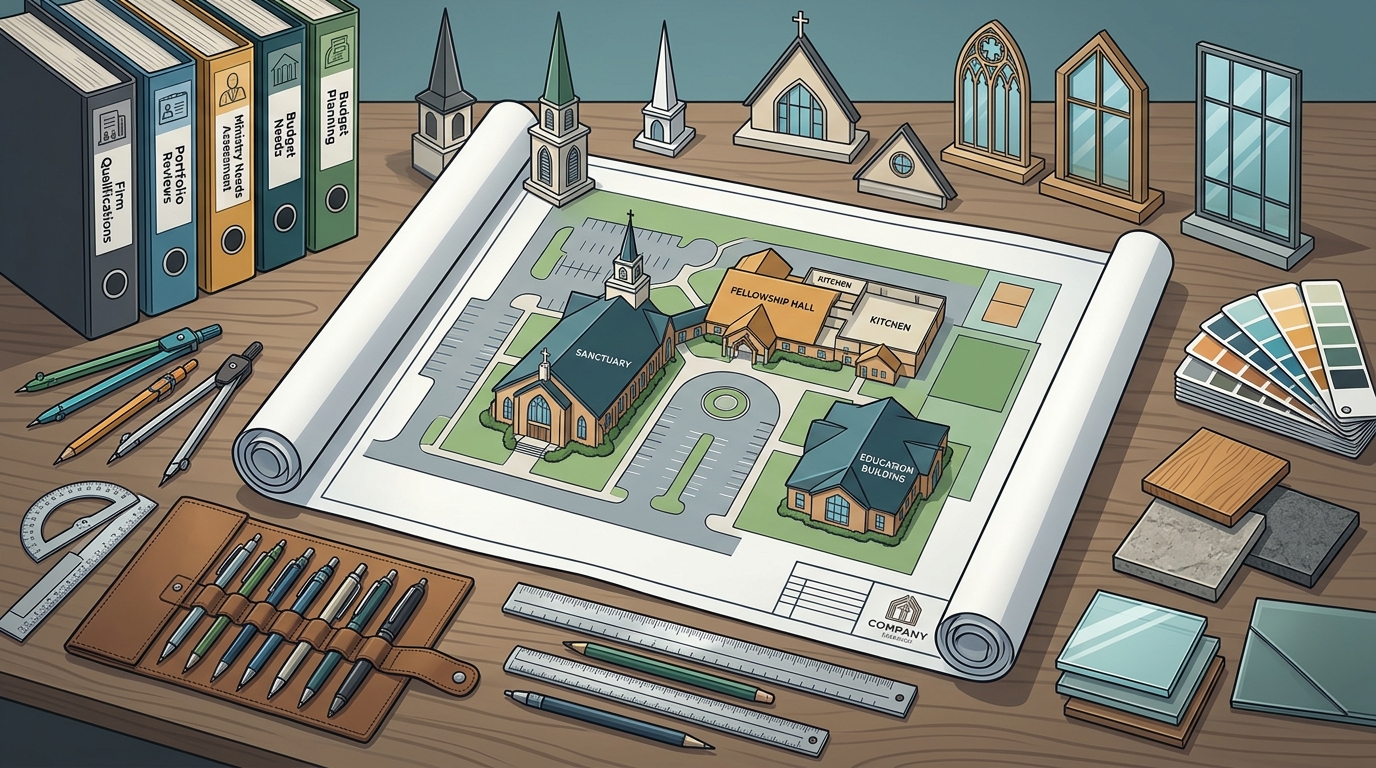
Once you understand your liturgical needs, the next step is evaluating the architectural firm itself. Firm selection criteria is the process of assessing an architecture practice's experience, philosophy, and operational capabilities to ensure they can deliver a successful project. It is not just about finding a talented designer; it is about finding a partner who understands the unique pressures of church building.
Ministry-First Philosophy
The most critical factor is whether the firm operates with a ministry-first mindset. A generalist architecture firm may produce a beautiful building, but they may not understand how a children's ministry flows on a Sunday morning or how a lobby should function for hospitality. Firms that specialize exclusively in church architecture, such as Crosspointe Architects, bring a depth of understanding that generalists simply cannot match. They have designed over 300 church projects and understand the specific challenges of church growth, fundraising, and community engagement.
Experience and Track Record
Look for a firm with a substantial track record in your specific type of church. Experience is measured not just in years, but in the number of completed projects and the square footage designed. A firm with over 30 years of experience and more than 2.5 million square feet of church buildings designed has encountered and solved almost every problem your project might face. This experience translates into better cost estimation, fewer change orders, and a smoother construction process.
Design Process and Collaboration
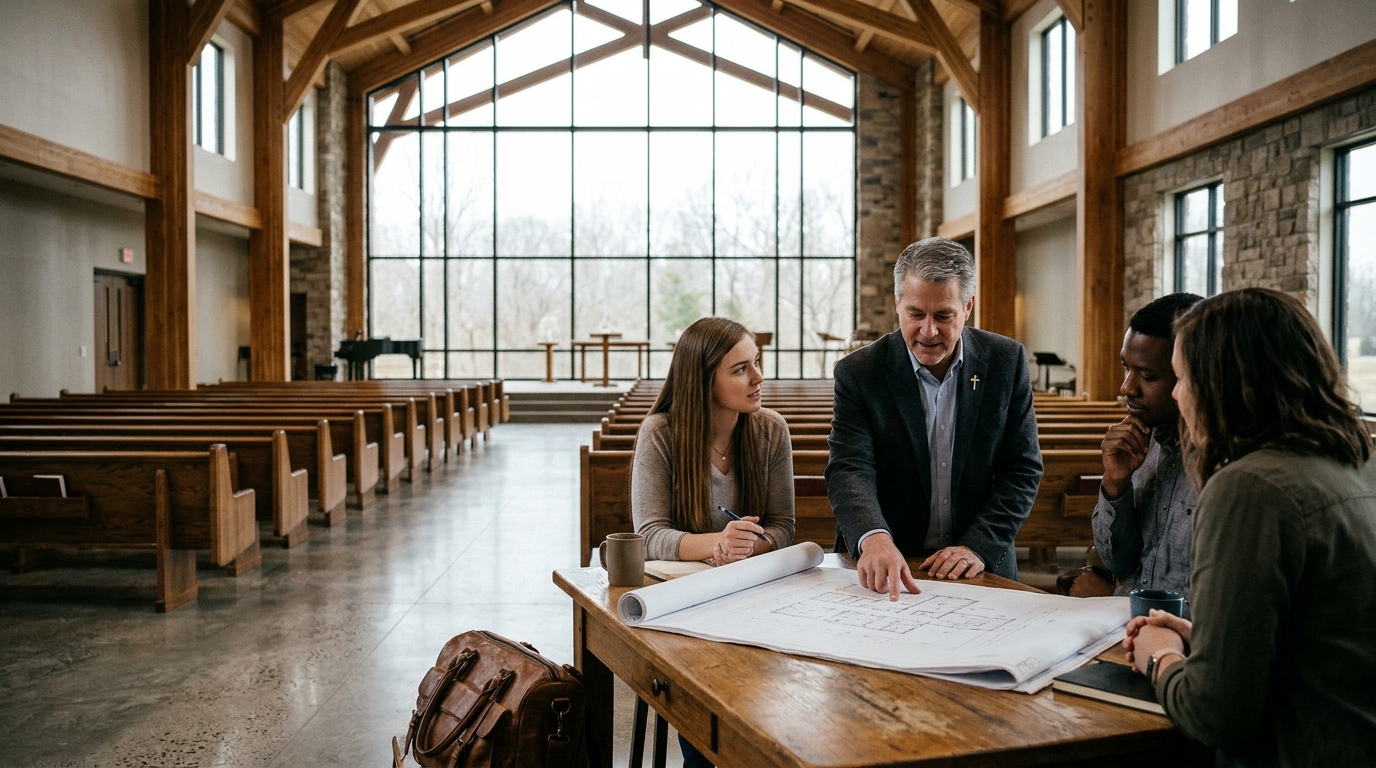
The process by which the firm works with your leadership team is just as important as the final design. Collaborative design is a methodology where the client's vision is actively integrated into the architectural process through interactive workshops and real-time feedback. Some firms use a unique approach like the Design Summit Workshop, which brings the architect to your church for several days to work directly with your leadership team. This hands-on process ensures that the design reflects your vision and saves months of time and money by resolving design decisions early in the process.
| Criteria | Generalist Firm | Church Specialist Firm |
|---|---|---|
| Ministry Understanding | Low; requires extensive education on church operations | High; built into the firm's core philosophy |
| Project Experience | Mixed portfolio; may have few church projects | Extensive; hundreds of church projects completed | Design Process | Standard; often remote or infrequent meetings | Interactive; on-site workshops and real-time collaboration | Fundraising Support | Limited; may not provide visual tools for campaigns | Comprehensive; provides renderings and animations for fundraising |
Key Takeaways
- Liturgical tradition dictates the architectural language and spatial requirements of your building.
- Specialized church architects bring a ministry-first philosophy that generalist firms often lack.
- Experience is measured in completed church projects and square footage designed, not just years in practice.
- A collaborative design process, such as an on-site workshop, ensures the design reflects your vision.
- Visual fundraising tools, like renderings and animations, are critical for successful building campaigns.
- Look for a firm that understands the full lifecycle of a church building, from concept to construction.
- The best architects are partners in your ministry, not just service providers.
Frequently Asked Questions
What is the difference between a generalist and a specialist church architect?
A generalist architect designs a wide variety of building types, while a specialist church architect focuses exclusively on religious facilities. Specialists have a deeper understanding of liturgical needs, church growth, and the unique challenges of church building projects. according to A Decade of
How important is the architect's experience with my specific denomination?
It is very important. Different denominations have specific liturgical requirements and architectural traditions. An architect with experience in your denomination will understand these nuances and can design a space that meets your specific needs.
What is a Design Summit Workshop?
A Design Summit Workshop is a collaborative design process where the architect comes to your church for several days to work directly with your leadership team. This hands-on approach allows for real-time feedback and ensures the design reflects your vision.
How long does the church building design process take?
The timeline varies depending on the complexity of the project, but a typical church building project can take anywhere from 12 to 24 months from concept to completion. A collaborative design process can help streamline the early stages of the project.
Do church architects help with fundraising?
Yes, many church architects provide visual fundraising tools, such as renderings and animations, to help your congregation see the vision for the new building. These tools can be instrumental in maximizing giving during your building campaign.
What should I look for in an architect's portfolio?
Look for a portfolio that includes a variety of church projects similar to your own. Pay attention to the quality of the design, the functionality of the spaces, and the feedback from past clients. A strong portfolio should demonstrate a consistent commitment to ministry-first design.
Can a church architect help with interior design?
Yes, many church architects offer full-service interior design, including the selection of finishes, furniture, and fixtures. This ensures that the interior of your building is cohesive and supports the overall design vision.
Conclusion
Choosing the best church architect in the United States requires a careful evaluation of both liturgical needs and firm capabilities. By focusing on a ministry-first philosophy, extensive experience, and a collaborative design process, you can find a partner who will help you build a space that serves your mission for generations to come. Contact Crosspointe Architects to start your journey toward a building that truly reflects your church's vision.