The total cost of building a church is driven by site conditions, square footage, material choices, and local labor rates. These variables interact to create a final budget that varies significantly by region and design complexity. Crosspointe Architects helps church leaders navigate these financial drivers to create spaces that serve their ministry without exceeding their fundraising goals.
Site Conditions and Zoning Requirements
For example, a church building on a hillside may require deep foundation piers and complex drainage systems, which can increase site work costs by thousands of dollars per foot. Understanding these constraints early prevents budget overruns during the construction phase. Crosspointe Architects includes master site planning in their process to ensure the building design aligns with the physical realities of the property.
Square Footage and Programmatic Needs
Square footage is the primary multiplier in any construction budget. The total area of the building directly correlates with the cost of framing, roofing, and finishing. However, the specific programmatic needs of the church determine how that square footage is allocated. A sanctuary with high ceilings and large windows requires more structural support and glazing than a standard classroom. Additionally, the inclusion of specialized spaces such as a commercial kitchen, a gymnasium, or a recording studio adds significant cost due to specialized mechanical and electrical systems.
Churches must balance their vision for worship with the practical needs of their ministries. A 20,000 square foot building with a large lobby and multiple classrooms will have a different cost profile than a 10,000 square foot building focused solely on worship. Crosspointe Architects offers pre-designed plans that allow churches to adjust seating capacity and room configurations to fit their specific budget and growth trajectory.
Material Selection and Finish Levels
The choice of building materials and interior finishes has a profound impact on the final price. Exterior cladding options range from standard vinyl siding to high-end stone or metal panels, each with a different price point and maintenance profile. Interior finishes, including flooring, cabinetry, and lighting, also contribute significantly to the total cost. High-end finishes can elevate the aesthetic appeal of a church but may strain the budget if not carefully managed.
It is essential to distinguish between cosmetic upgrades and functional necessities. While a premium lobby design may enhance the visitor experience, it is not always a structural requirement. Crosspointe Architects provides interior design services that help churches select finishes that align with their brand and budget. By choosing a select and specify format, churches can maintain control over their finish costs while still achieving a professional look.
Labor Rates and Regional Variations
Labor costs vary widely by region and are a major component of the total construction budget. In high-cost-of-living areas, skilled tradespeople such as electricians, plumbers, and carpenters command higher hourly rates. This regional variation means that the same building design can cost significantly more in one state than in another. Additionally, the availability of skilled labor in a specific market can affect project timelines and costs, as shortages may lead to premium pricing for expedited work.
Churches in rural areas may face different challenges, such as limited access to specialized contractors or higher transportation costs for materials. Understanding the local labor market is crucial for accurate budgeting. Crosspointe Architects works with locally licensed architects and contractors to ensure that their designs are feasible and cost-effective in various jurisdictions across the country.
Design Process and Phasing
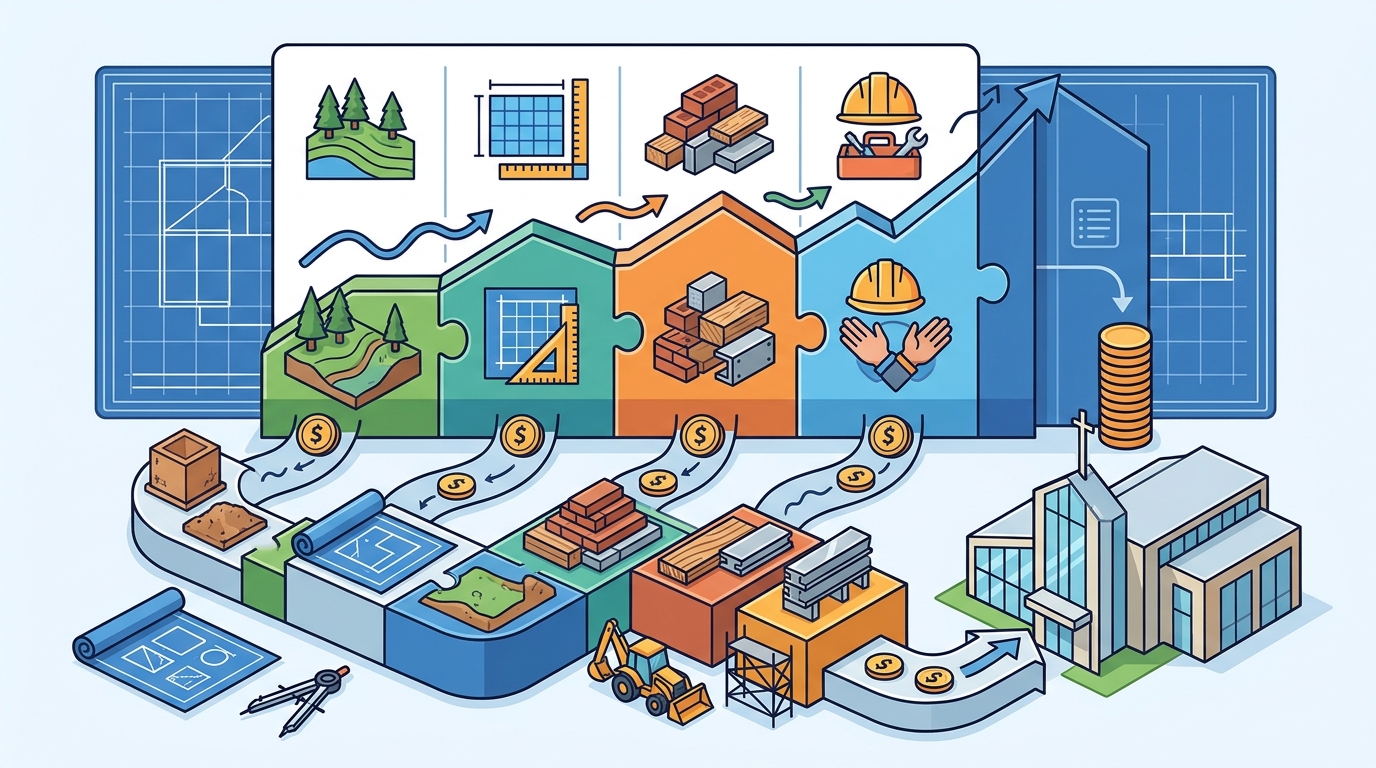
The design process itself can influence the total cost through its impact on decision-making and change orders. A structured design process helps churches make informed decisions early in the project, reducing the likelihood of costly changes during construction. The Design Summit Workshop is an example of a collaborative process that allows church leaders to visualize their vision and make key decisions before construction begins. This approach can save months of time and a substantial amount of money by preventing late-stage revisions.
Phasing the construction project can also help manage costs. Building in stages allows churches to spread out their fundraising efforts and construction costs over a longer period. This approach can be particularly useful for churches with limited initial budgets. Crosspointe Architects supports phased construction by designing buildings that can be expanded or modified in the future without compromising the initial structure.
Key Takeaways
- Site conditions and zoning requirements are often the most unpredictable cost drivers.
- Square footage and programmatic needs directly correlate with the base construction cost.
- Material selection and finish levels can significantly impact the final price.
- Labor rates vary by region and can affect both the cost and timeline of the project.
- A structured design process helps prevent costly change orders during construction.
- Phasing construction can help manage fundraising and budget constraints.
Frequently Asked Questions
What is the biggest cost driver in church construction?
Square footage is typically the biggest cost driver, as it directly impacts the amount of materials and labor required. However, site conditions and material choices can also have a significant impact.
How does the design process affect the total cost?
A structured design process helps churches make informed decisions early, reducing the likelihood of costly changes during construction. This can save time and money in the long run.
Can I phase my church building project?
Yes, phasing construction allows churches to spread out their costs and fundraising efforts over a longer period. This can be a useful strategy for managing budget constraints.
How do labor rates affect the cost of building a church?
Labor rates vary by region and can significantly impact the total cost. In high-cost areas, skilled tradespeople command higher rates, which can increase the overall budget.
What is the role of an architect in managing construction costs?
An architect helps manage construction costs by providing accurate estimates, guiding material selection, and ensuring that the design is feasible and cost-effective. They also help prevent costly change orders during construction.
Start Your Church Building Project with Confidence
Understanding the factors that impact the total cost of building a church is the first step toward a successful project. By working with a specialized firm like Crosspointe Architects, church leaders can navigate these financial drivers with confidence. Their ministry-first approach ensures that the building serves the mission of the church while staying within budget. To begin your project, to discuss your vision and goals.