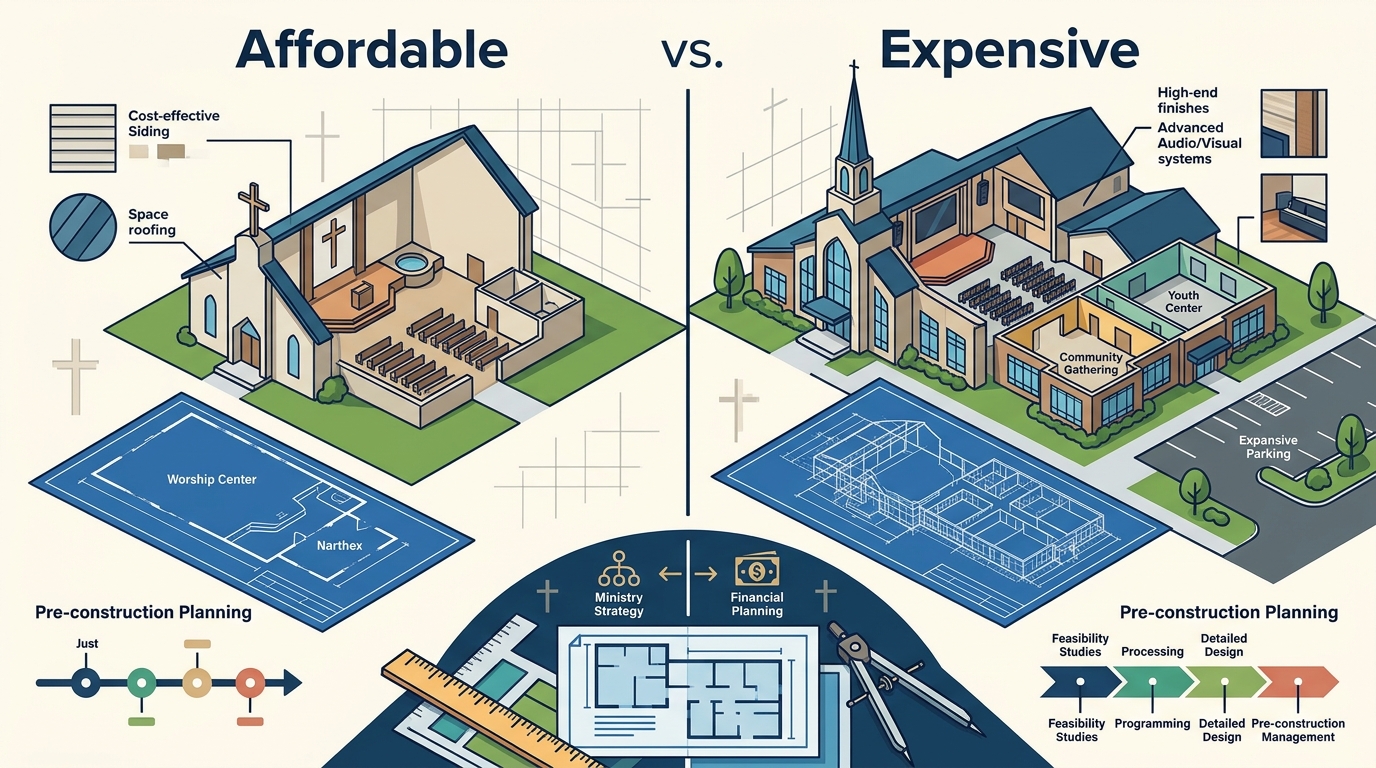
When comparing affordable and expensive church builds, the primary difference lies in the depth of pre-construction planning and the complexity of the facility's functional zones. An affordable build typically prioritizes a single, efficient worship space with minimal auxiliary rooms, while an expensive build invests heavily in multi-purpose environments, high-end finishes, and long-term scalability. Crosspointe Architects helps churches navigate this spectrum by aligning design choices with ministry goals and budget realities.
Defining the Cost Spectrum
Option 1: The Affordable Church Build
The affordable approach focuses on efficiency and core function. These projects often utilize pre-designed plans or simple rectangular footprints to minimize structural costs. The primary strength of this option is the lower barrier to entry, allowing smaller congregations to secure a dedicated worship space without taking on excessive debt. However, the limitation is flexibility. A single-purpose room may struggle to accommodate diverse ministry needs, such as children's programs, small groups, or community events, without significant renovation later. This option suits churches with a clear, singular focus on worship and a tight budget.
Option 2: The Expensive Church Build
The expensive approach prioritizes versatility and long-term growth. These projects feature complex floor plans with multiple zones, including lobbies, cafes, classrooms, and administrative suites. The strength here is the ability to serve the community throughout the week, not just on Sundays. High-end finishes and robust infrastructure support a modern ministry model. The limitation is the high upfront cost and longer construction timeline. This option suits growing churches that anticipate expansion and require a facility that functions as a community hub. Crosspointe Architects often guides churches in this category through their Design Summit process to ensure the complexity is justified by ministry needs.
Comparison of Build Types
| Criteria | Affordable Build | Expensive Build |
|---|---|---|
| Initial Capital Cost | Lower | Higher |
| Functional Versatility | Limited to core worship | High, multi-purpose zones |
| Construction Timeline | Shorter | Longer |
| Long-Term Scalability | Requires future renovation | Built for expansion |
| Community Engagement | Weekend focused | Weekday and weekend active |
Key Cost Drivers
Several factors determine where a project falls on the cost spectrum. The most significant driver is among the square footage and the number of distinct functional zones. A building with a large lobby, cafe, and multiple classrooms will cost significantly more than a single sanctuary. Another major factor is the level of pre-construction planning. Projects that undergo a thorough design process, such as the Design Summit Workshop, often save money in the long run by preventing costly changes during construction. Finally, the choice between custom and pre-designed plans impacts cost. Architectural plans that are pre-designed can reduce design fees, while custom designs offer unique solutions but may require more time and resources.
Choose the Affordable Option If
Choose the affordable option if your congregation is stable in size and your primary goal is to provide a dignified space for worship. This is also the right choice if your budget is strictly capped and you cannot support a long-term debt service. It suits churches that do not plan to expand their physical footprint in the next 10 to 15 years.
Choose the Expensive Option If
Choose the expensive option if your church is growing rapidly and you need space for multiple ministries. It is also the right choice if you want to serve your community on weekdays through events, classes, or food services. This option suits churches that view their facility as a long-term investment in their mission and community impact. To explore how a complex design can be managed efficiently, consider the custom design process offered by Crosspointe Architects.
Frequently Asked Questions
Can I start with an affordable build and expand later?
Yes, but it requires careful planning. You must design the initial structure with future expansion in mind, including utility connections and structural support. Without this foresight, adding space later can be significantly more expensive than building it initially.
Does a more expensive build always mean a better design?
How does the design process affect the final cost?
A thorough design process can reduce overall costs by identifying potential issues early. For example, the church architecture services provided by Crosspointe Architects include a collaborative workshop that helps define needs before drawing begins, which can prevent costly changes during construction.
What is the biggest mistake churches make when budgeting?
The biggest mistake is underestimating the cost of auxiliary spaces. Many churches focus on the sanctuary and forget to budget for lobbies, restrooms, and administrative offices, which can add significantly to the total project cost.
How can I get a better understanding of my budget?
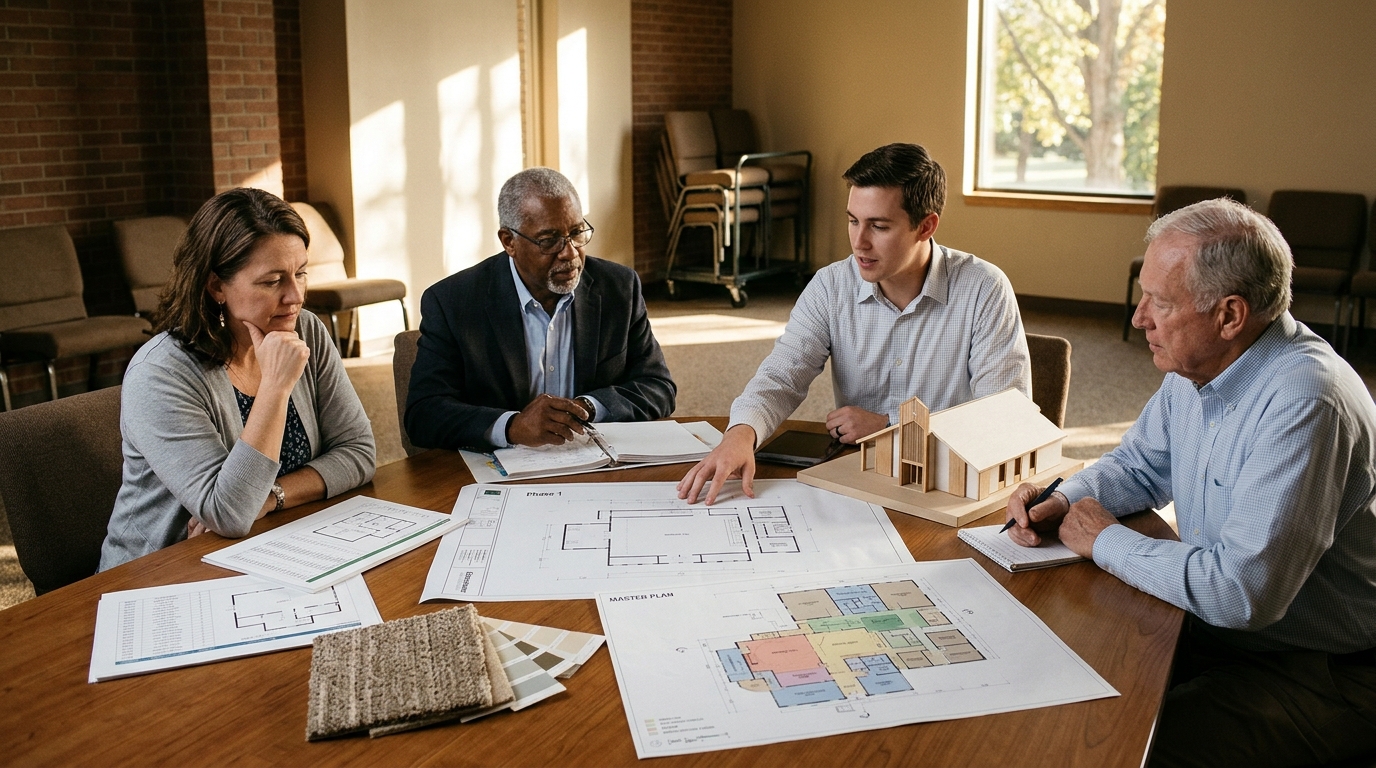
Consulting with an experienced church architect early in the process is the best way to understand your budget. By reviewing your ministry goals and site constraints, an architect can provide a realistic estimate of what is achievable within your financial means. You can contact our team to discuss your specific situation.
Conclusion
The difference between an affordable and an expensive church build comes down to function, flexibility, and long-term vision. There is no one-size-fits-all answer; the right choice depends on your congregation's current needs and future goals. Crosspointe Architects is dedicated to helping you make this decision with clarity and confidence. By leveraging our experience with over 300 church projects, we can guide you toward a design that serves your ministry effectively. To begin your journey, contact Crosspointe Architects today.