
7 Factors That Increase or Decrease Multi-Site Church Expansion Costs
Multi-site church expansion is a complex financial undertaking that requires careful planning to avoid budget overruns. The total cost of building new campuses or expanding existing ones is rarely determined by square footage alone. Instead, a combination of site conditions, design choices, and operational strategies drives the final price tag. Understanding these variables allows leadership teams to make informed decisions that protect their financial health while advancing their ministry mission. For additional details, review the Crosspointe Church Architects Contact.
1. Site Acquisition and Preparation
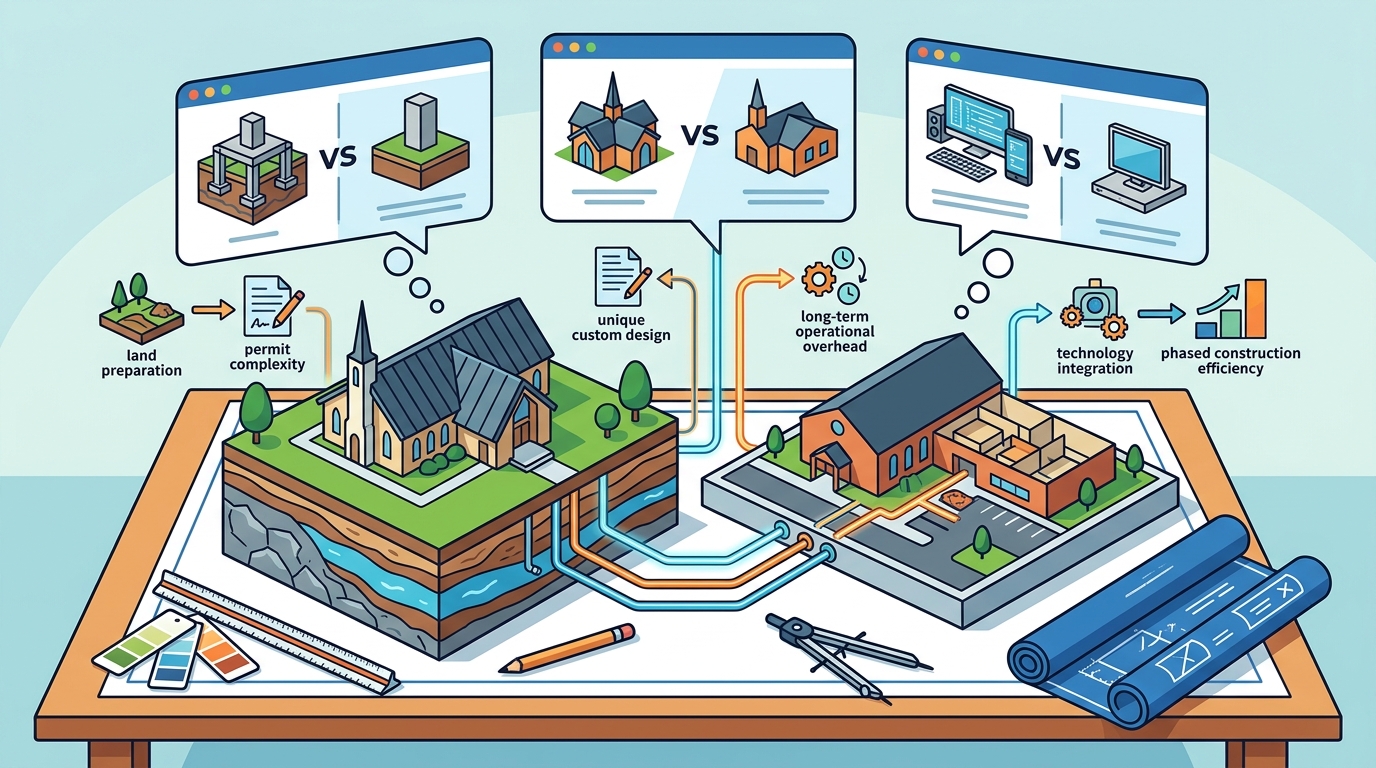
The cost of land and site preparation often accounts for a significant portion of the initial budget. Site acquisition is the purchase of the real estate where the new campus will be built. The price per acre varies drastically based on location, zoning, and market demand. Beyond the purchase price, site preparation involves grading, utility connections, and environmental remediation. A flat, accessible site with existing infrastructure is far cheaper to develop than a steep, wooded, or contaminated parcel. For additional details, review the Crosspointe Church Architects Our.
2. Architectural Complexity and Design
Complex rooflines and custom facades increase structural costs, while efficient floor plans reduce them. Architectural design is the blueprint for the physical structure. Simple, rectangular footprints with standard roof pitches are generally less expensive to build than designs with complex geometries, large glass walls, or unique spires. However, a well-designed layout that maximizes usable space can lower the cost per square foot. Crosspointe Architects emphasizes that the design phase is where the most significant cost-saving decisions are made, as changes become exponentially more expensive once construction begins. For additional details, review the Crosspointe Church Architects Home.
3. Local Regulations and Permits
Navigating local zoning laws and building codes can add months to the timeline and thousands to the budget. Local regulations are the set of rules enforced by municipal governments that dictate how a building can be constructed. These include zoning setbacks, parking requirements, fire safety codes, and accessibility standards. In some jurisdictions, churches face specific restrictions on noise, hours of operation, or building height. Failing to account for these regulatory hurdles early can lead to costly redesigns and permit delays. For additional details, review the Crosspointe Church Architects Our.
4. Construction Market Conditions
Fluctuations in material prices and labor availability directly impact the final construction cost. Construction market conditions refer to the economic environment surrounding the building industry. Prices for steel, lumber, and concrete fluctuate based on supply chain dynamics and demand. Labor costs also vary by region and season. Building during peak construction seasons or in high-demand areas can significantly increase costs. Conversely, locking in contracts early or building in off-peak seasons can mitigate these financial risks. For additional details, review the Crosspointe Church Architects Church.
5. Interior Finishes and Technology
6. Fundraising Strategy and Pacing
The speed and efficiency of the fundraising campaign influence the total project cost through interest and inflation. Fundraising strategy is the plan for gathering the necessary capital to build the new campus. A slow fundraising campaign extends the project timeline, which increases costs due to interest on construction loans and inflation on materials. A well-executed campaign that aligns with the construction schedule can reduce the total financial burden. Visual tools, such as renderings and animations, are critical for accelerating donor commitment and keeping the campaign on track.
7. Long-Term Operability and Maintenance
Choosing durable, low-maintenance materials reduces the total cost of ownership over the building's lifespan. Long-term operability refers to the ease and cost of maintaining and operating the building after it is completed. Expensive, fragile materials may look impressive initially but require constant repair and replacement. Durable, low-maintenance materials may have a higher upfront cost but save money over decades. Considering the total cost of ownership, rather than just the construction cost, is essential for sustainable church growth.
Choosing the Right Approach
To manage multi-site expansion costs effectively, churches should prioritize early, collaborative design processes. Engaging an architecture firm that understands ministry needs ensures that the design is both functional and budget-conscious. By addressing site, design, and regulatory factors before breaking ground, leadership can avoid costly surprises and build a sustainable foundation for future growth.
Frequently Asked Questions
How much does it cost to build a new church campus?
What is the most expensive part of church construction?
Structural work and mechanical, electrical, and plumbing (MEP) systems are typically the most expensive components. Interior finishes and technology also represent a significant portion of the budget.
Can a church build multiple sites at once?
Yes, but it requires a robust financial strategy and strong leadership. Building multiple sites simultaneously can leverage economies of scale but also increases financial risk if fundraising falls short.
How does design affect construction costs?
Design complexity directly impacts labor and material costs. Simple, efficient designs are cheaper to build, while complex, custom designs require specialized labor and materials, increasing the price.
What is the role of an architect in controlling costs?
An architect helps control costs by optimizing the design for efficiency, selecting appropriate materials, and navigating local regulations. They also provide accurate cost estimates and manage the construction process to prevent overruns.